After a couple of years of trials and tribulations for the British Columbia (BC) wine industry, finally there is good news. Following two consecutive vintages in which little, if any at some producers, wine was made due to extreme weather-related challenges, the 2025 harvest is offering up both a large quantity and high quality crop of wines. As Rhys Pender MW wrote in the just released 2025 Vintage Report from Wine Growers BC, “The 2025 vintage lifted an enormous weight off the collective shoulders of the BC wine industry.” That is no exaggeration.
Back in January 2023, many BC vineyards were impacted by an unusually long deep freeze, followed by a summer filled with wildfire smoke, leading to a severely diminished crop of grapes. Then in winter 2023-2024, another, even longer, deep freeze settled in on BC’s interior vineyards, this time devastating many vines. With so many wineries having almost no grapes to harvest in 2024, the BC government stepped in and approved a temporary program allowing BC wineries to buy wine grapes and/or juice from US producers, and bottle it in BC. This critical intervention probably saved several wineries from going under.
Fast forward two years and the plentiful harvest of healthy grapes in vintage 2025 has come as a critical turning point in BC’s wine industry. While the overall climate is undoubtedly changing as a result of global warming, Mother Nature smiled on BC last year, with a mild winter, an early yet frost-free spring, smoke-free summer days, and an extended warm autumn that resulted in record heat accumulation in the all-important month of September. In addition, cool nights, notable diurnal temperature variation, and a consistent, steady growing season have resulted in wines that are well-balanced, elegant and fresh. How so many damaged vines managed to recover after two consecutive years of deep freeze is something of a mystery, but grapevines are notoriously resilient, digging their roots deep in pursuit of nourishment and sustenance. Many vines that growers thought had perished in the winter freeze of 2023-24 recovered with a larger, healthier crop than anticipated.
Many wine producers in BC’s Okanagan Valley, the most important wine producing region in the province, are reporting 2025 wines that are above average quality. After two consecutive vintages of very little wine, owners are breathing sighs of relief, and local consumers are no doubt looking forward to drinking 100% made in BC wines again.
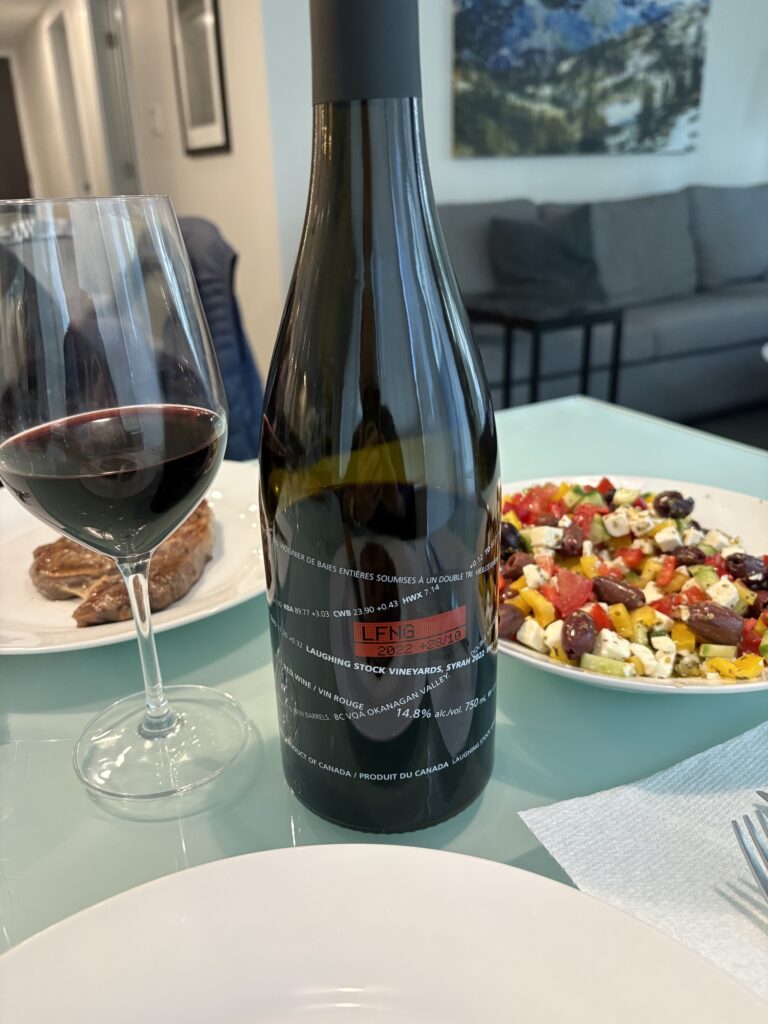
So what do the wines from before those two benighted vintages taste like? I was curious about this. Typical of the perseverance of BC wines is Laughing Stock Vineyards’ Syrah. While the winery is based on the Naramata Bench overlooking Okanagan Lake, the grapes for this wine are from a 22-acre vineyard in the southern Okanagan Valley, near Osoyoos. In the recently announced Okanagan Wine Festivals 2026 Top 50 Wine Awards, the 2023 vintage won BC Wine of the Year, and the winery itself was voted BC’s Winery of the Year. That’s certainly no laughing stock! Tonight we opened — and thoroughly enjoyed — their 2022 Syrah. Co-fermented with a smidge (4%) of Viognier grapes (a la Côte Rotie in the Northern Rhone), it was aged 20 months in French oak barrels, 41% new. On the nose it is spicy, peppery, fragrant and fresh, with lifted floral, perfumed notes thanks to the Viognier in the blend. On the palate it again offers up fresh, sapid, tangy, peppery flavours, with a mineral, smooth-textured structure, velvety tannins and a long, plummy finish. It went very well with our grass-fed ribeye steak and Greek salad dinner.
Having weathered the storm, I’m now looking forward to tasting the 2025s that are beginning to arrive in the BC market. Very good news indeed.